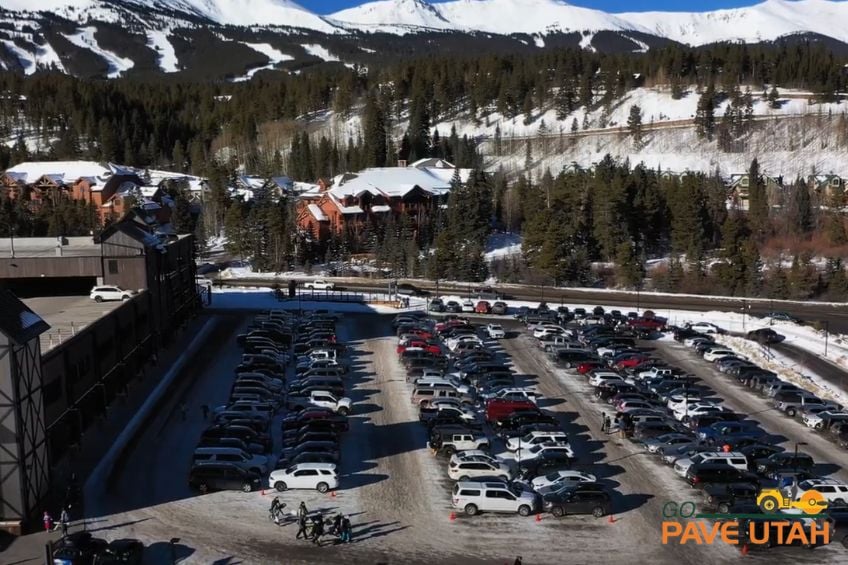
The first snowfall in Utah can transform the appearance of your commercial property overnight. Fresh snow may cover faded pavement markings, worn asphalt, and minor surface imperfections, but it does not make those problems disappear. As snow melts and temperatures fluctuate, existing pavement damage can become easier to recognize.
For property managers and commercial property owners, early winter offers an opportunity to see how well your parking lot is performing under changing conditions. Commercial asphalt maintenance is not just about keeping pavement looking presentable. It is about recognizing deterioration, understanding how seasonal conditions affect your property, and determining when repairs may be necessary. Working with Go Pave Utah can help you identify asphalt concerns before winter weather places additional demands on your parking lot.
A parking lot that appeared relatively smooth throughout summer and fall may begin showing more noticeable signs of deterioration when colder weather arrives. Existing cracks, weakened pavement edges, and damaged areas can become more apparent as moisture and temperature changes affect the surface. Water entering cracks can freeze and expand when temperatures drop below freezing, and repeated freezing and thawing can contribute to further deterioration, particularly where the pavement is already compromised. This is why the first snowfall should encourage a closer look at your asphalt rather than simply signal the beginning of colder weather. Identifying visible damage helps you understand which areas may require attention as winter progresses.
Snow does not need to remain on your parking lot to reveal potential problems. Sometimes the most useful observations happen after it melts. As snowmelt moves across your property, it can highlight areas where water collects, drainage is restricted, or pavement has become uneven. Although standing water does not always indicate structural damage, recurring accumulation deserves attention.
Uneven asphalt that holds water longer than surrounding areas, deteriorated pavement around drainage structures, and cracks that allow moisture to enter are all conditions worth watching. These issues can become more troublesome when temperatures fall again and accumulated water freezes. Recognizing how snowmelt moves across your property can help you make better decisions about parking lot maintenance and potential asphalt repairs.
Your parking lot continues working regardless of the weather. Customers still need parking spaces, employees still arrive for work, and delivery vehicles continue using entrances, drive lanes, and loading areas. When existing pavement damage combines with winter moisture and repeated vehicle loading, deteriorated areas may experience additional stress. Potholes, weakened edges, and uneven surfaces can become more noticeable in heavily traveled sections. Areas near entrances, loading zones, and frequently used drive aisles may deserve particular attention because of repeated traffic and vehicle maneuvering. Keeping track of existing damage gives you a clearer understanding of which areas may need professional evaluation, even when weather conditions limit immediate repair options.
The first snowfall should not be viewed as a deadline for completing every pavement repair. Utah winter conditions can affect which asphalt maintenance and repair methods are appropriate, making professional evaluation especially valuable. Instead of assuming every crack or damaged area requires the same solution, consider the overall condition of your parking lot, the location of deterioration, and how traffic and moisture affect the surface.
Go Pave Utah works with Utah commercial property owners and property managers to evaluate asphalt conditions and identify appropriate maintenance and repair options. Whether your property needs attention to cracking, localized pavement damage, or broader asphalt deterioration, understanding the condition of your parking lot helps guide the next step. Winter may cover your pavement temporarily, but it can also reveal which areas deserve a closer look, helping you make informed maintenance decisions throughout the colder months.